
A Home Selling for 99% of Asking Price Doesn’t Tell the Whole Story
What recent Gold River home sales reveal about pricing in today’s real estate market
If you heard that homes in Gold River were selling for an average of 99% of their asking prices, you might assume sellers were getting almost everything they wanted.
But there’s more to that number than meets the eye.
I recently reviewed all 27 homes that closed in Gold River over a three-month period, and what I found reinforces something I’ve learned throughout my 23 years in real estate: The asking price you choose at the beginning can influence how buyers respond to your home and how the sale unfolds.
What the Gold River Sales Actually Show
According to my MLS research, of the 27 homes that sold:
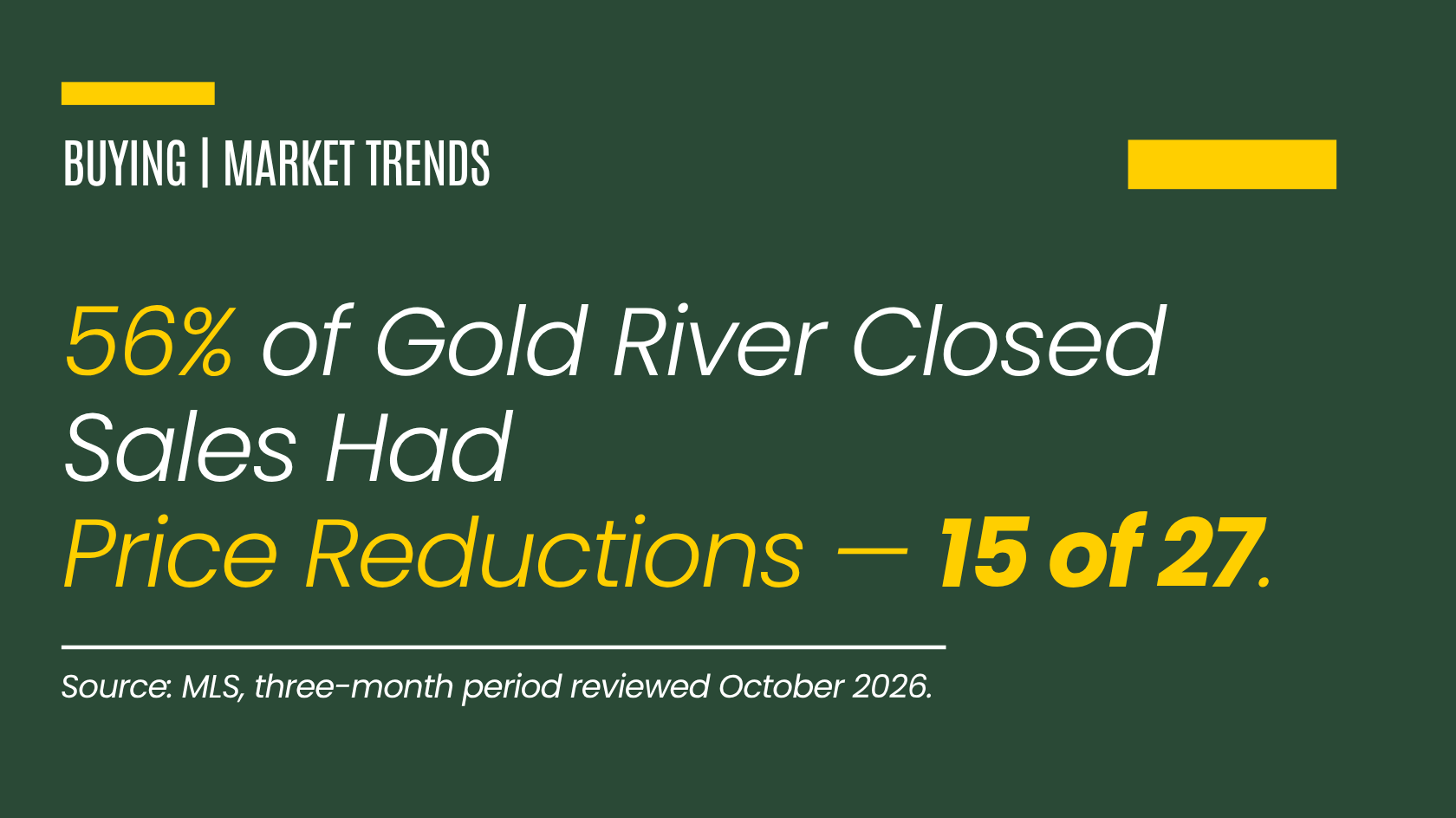
- 15 homes (56%) required at least one price reduction.
- 11 of those 15 homes ultimately sold for less than their already-reduced asking prices.
- 7 homes sold below their original asking prices without a formal price reduction.
- Only 5 homes sold at or above their original asking prices without a price reduction.
Yet the average sale-to-list-price ratio was 99%.
How can that be?
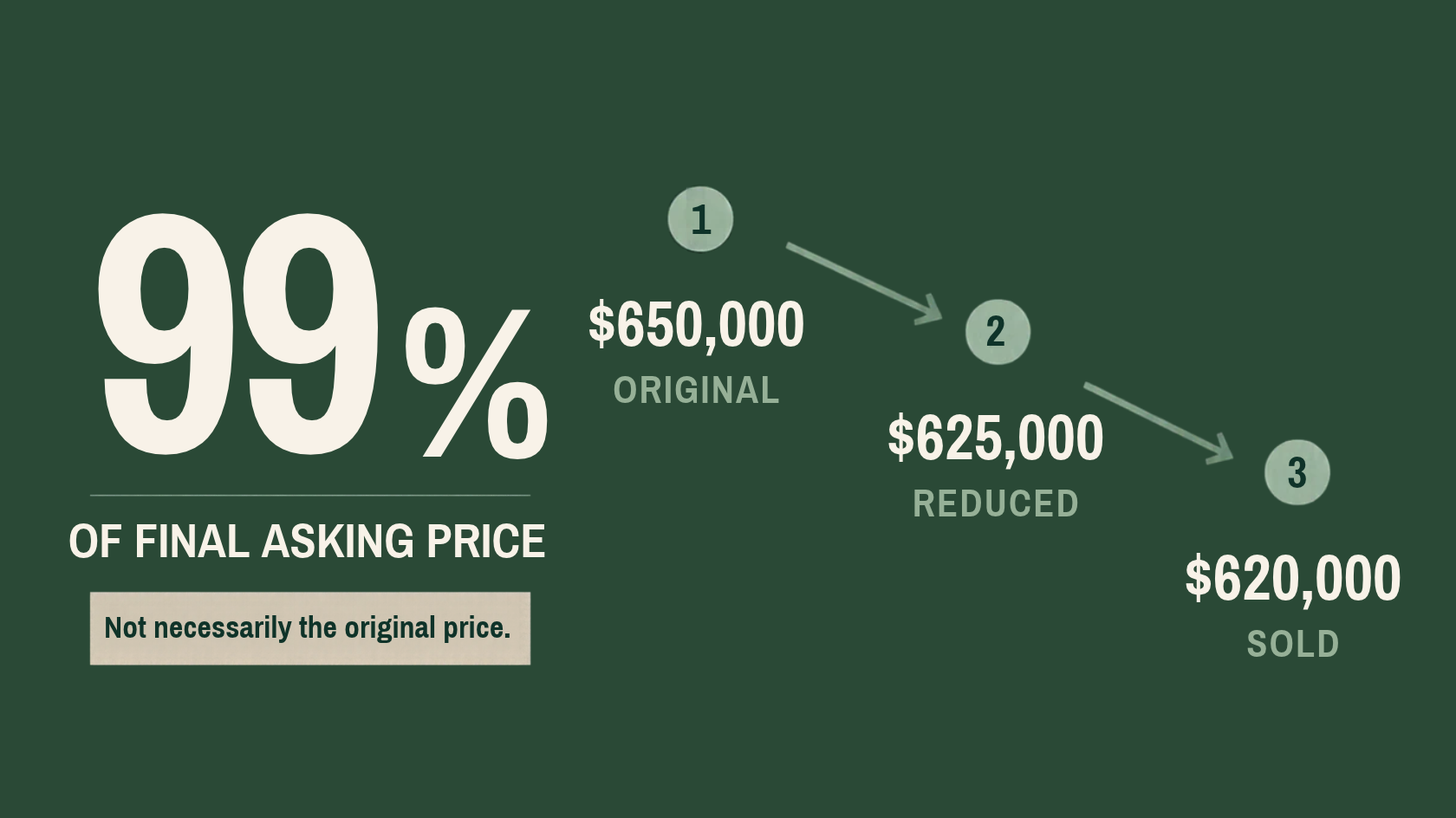
Because the 99% figure compares the final selling price to the last listed price, not necessarily the price at which the home originally entered the market.
For example, a home could start at $650,000, reduce its asking price to $625,000, and sell for $620,000. That would represent approximately 99% of its final asking price, even though the seller accepted $30,000 less than the original asking price.
That’s an important distinction for homeowners trying to understand what homes are actually selling for.
Different Markets, Different Results
To see whether Gold River’s experience was typical of nearby communities, I also reviewed 75 closed home sales in Rancho Cordova’s 95670 ZIP code over the same three-month period.
The results were noticeably different.
In Rancho Cordova, 40% of homes required price reductions, compared with 56% in Gold River. And while 67% of Gold River homes sold below their final asking prices, that figure was just 37% in Rancho Cordova.
The comparison reinforces an important point: Even neighboring real estate markets can behave differently.
That’s why I believe pricing recommendations should reflect the specific community, current competition, and individual property—not just general headlines about the Sacramento housing market.
Even a Seller’s Market Has Its Limits
Gold River was classified as a strong seller’s market in the October 9 Altos market report.
That sounds like good news for homeowners considering selling, and it is. But a seller’s market doesn’t mean buyers will pay any price.
Buyers can compare homes, evaluate condition, and negotiate when they believe a property is priced above its market value.
A higher asking price may seem like a good way to leave room for negotiation. But if buyers don’t see the value, sellers may find themselves reducing their price to generate renewed interest.
And as the recent Gold River sales demonstrate, a price reduction doesn’t necessarily mean the final sale price will meet that reduced asking price.
A Recent Gold River Sale Illustrates the Point
One home I followed recently entered the market at $629,000.
It went under contract within the first week, but that transaction didn’t close. The home returned to the market with a reduced asking price of $619,000 and eventually sold for $600,000.
That’s $29,000 below its original asking price.
We can’t know whether a different initial price would have changed the outcome. But this sale illustrates why it’s important to look beyond the asking price and consider how buyers are responding to the property and its competition.
What Does This Mean if You’re Thinking About Selling in 2027?
Pricing a home isn’t simply a matter of looking at what a neighbor listed for or adding a little extra to leave room for negotiation.
A thoughtful pricing recommendation considers recent comparable sales, current competition, property condition, improvements, and how buyers are responding to homes in a particular price range.
It also requires understanding the difference between what sellers hope to receive and what current market conditions support.
The Gold River results don’t mean every home should be priced lower. They demonstrate why each home needs an individual evaluation rather than a pricing strategy based on general market headlines.
And while this research focuses on Gold River, the same principles apply to homeowners in Rancho Cordova and Folsom.
The Bottom Line
When you hear that homes are selling for 99% of asking price, remember to ask: 99% of which asking price?
The original price or the price after one or more reductions?
That difference can tell a very different story about the market.
If you’re considering selling in 2027, understanding your home’s likely market value before choosing an asking price is one of the most important steps you can take.
My goal is to help you make that decision with realistic expectations, current market information, and a pricing strategy tailored to your property.
Thinking about selling in 2027? Contact me to schedule a personalized pricing review. We’ll discuss your home’s condition, recent comparable sales, and current competition so you can make an informed decision about your next move.
Sheryl A Smith, REALTOR® | Serving Rancho Cordova, Folsom, and Gold River
Source note: MLS review of 27 Gold River and 75 Rancho Cordova 95670 closed sales over the same three-month period reviewed in October 2026. The 99% Gold River sale-to-list ratio uses FINAL list prices. Gold River market classification: Altos Research, October 9, 2026.

